


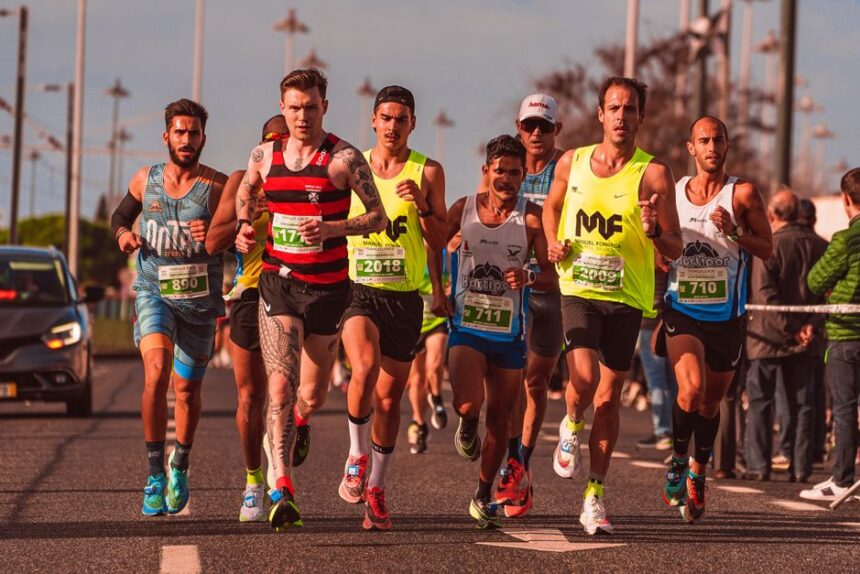
This article examines how the precise distance of 26 miles and 385 yards became the international standard for marathon running, focusing strictly on distance standardisation, early Olympic variations, and the transition from informal routes to a fixed metric. Rather than covering the broader historical evolution of endurance racing, the following sections untangle the mix of royal requests, committee decisions, and historical mythmaking that permanently locked in this specific measurement.
Separating Legend from the Modern Race
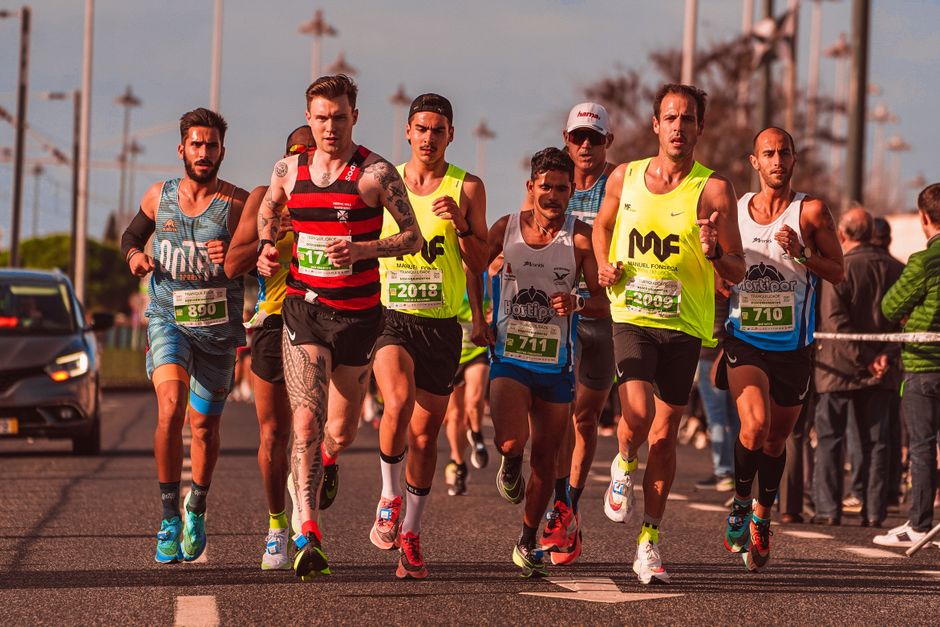
Popular culture often attributes the origin of the marathon distance to the ancient Greek messenger Pheidippides, who supposedly ran from the battlefield of Marathon to Athens to announce a military victory before collapsing. Sports historians, however, point out that this specific tale blends various historical accounts from antiquity. Herodotus wrote of Pheidippides running from Athens to Sparta to request military assistance—a distance of roughly 140 miles—prior to the battle, while later writers like Plutarch and Lucian introduced the legend of the fatal post-battle sprint to Athens.
When the modern Olympic movement revived the event for the Athens 1896 Games, organisers sought to ground the race in classical heritage. They mapped an approximate route from the plains of Marathon to the Panathenaic Stadium in Athens. That initial route was roughly 40 kilometres, or about 24.8 miles. Crucially, the founders of the modern Olympics did not use a strict, uniform standard. They simply wanted a race that roughly mirrored the legendary geography of antiquity. The exact origins of the marathon distance as we know it today had little to do with ancient surveying and everything to do with late-19th and early-20th-century athletics administration.
Early Olympic Variations and Variable Routes
In the first decade of the revived Olympic Games, the distance covered by runners fluctuated significantly depending on the host city and local road networks. There was no fixed international governing body yet to mandate a single measurement. At the 1900 Paris Olympics, runners navigated a convoluted course through the city streets that measured approximately 40.26 kilometres. At the 1904 St. Louis Olympics, dusty, unpaved roads and chaotic management yielded a course measuring roughly 24.85 miles, complicated further by vehicle traffic and poor course marking.
These early variations demonstrated that endurance racing was still finding its operational footing. Organisers treated the event more like a cross-country or point-to-point road journey than a rigorously measured athletic track event. As the marathon became a modern endurance event, athletic federations realised that fair international competition required a single, unchanging standard. Without a standardized distance, comparing times, setting records, or hosting unified championships proved nearly impossible.
The 1908 London Olympics and the Royal Box
The definitive shift toward the precise distance of 26 miles and 385 yards occurred during the 1908 Olympic Games in London. Originally, organisers planned for the race to cover approximately 25 miles, starting from Windsor Castle and finishing at White City Stadium. However, the exact placement of the finish line became a point of contention involving the British royal family.
According to widely accepted accounts, Queen Alexandra requested that the race start on the lawn of Windsor Castle so that the royal children could view the departure, and finish directly in front of the royal box inside White City Stadium. Measuring from the Windsor start to that specific royal vantage point yielded a distance of 26 miles and 385 yards—or 42.195 kilometres. While various local organizing committees used different distances in subsequent years, the novelty, scale, and media attention of the 1908 London event left a lasting impression on international sports officials.
Standardisation by International Governing Bodies
Despite the convenience of the 1908 distance, it did not instantly become the global rule. Several subsequent Olympic Games used alternative lengths close to 40 kilometres. For instance, the 1912 Stockholm Olympics used a 40.2-kilometre course, and the 1920 Antwerp Games used a 42.75-kilometre route.
Pressure mounted from athletes and national federations to establish a permanent international standard to avoid confusion. In 1921, the International Amateur Athletic Federation, now known as World Athletics, officially adopted the 1908 London distance of 26 miles and 385 yards as the official length for all future marathons. This decision eliminated the guesswork of host cities mapping out arbitrary routes based on local convenience or royal requests.
Today, this specific measurement governs elite competitions, club races, and mass-participation events worldwide. Course measurers use calibrated bicycles equipped with Jones counters to verify that every certified route meets this exact standard down to the centimetre. What began as a bespoke route designed for a royal audience in West London transformed into a rigid, universally accepted metric that defines endurance running today.
If you have questions about how our editorial standards apply to sports history and public health reporting, you can reach out through our contact page.