


London Health JournalLondon Health JournalLondon Health Journal
  • Home
  • Health News
  • Wellness
  • Research
  • Fitness & Movement
  • Mental Health
  • Nutrition
  • Interviews
Font ResizerAa
London Health JournalLondon Health Journal
Font ResizerAa
  • Home
  • Health News
  • Wellness
  • Research
  • Fitness & Movement
  • Mental Health
  • Nutrition
  • Interviews
Search
  • Home
  • Health News
  • Wellness
  • Research
  • Fitness & Movement
  • Mental Health
  • Nutrition
  • Interviews
Home » Tennis Elbow: What Helps, What Has Limits and When to Seek Advice
Fitness & Movement

Tennis Elbow: What Helps, What Has Limits and When to Seek Advice

Amelia Hart
By Amelia Hart
13 May 2026
Navigating Treatment Options for Tennis Elbow
SHARE

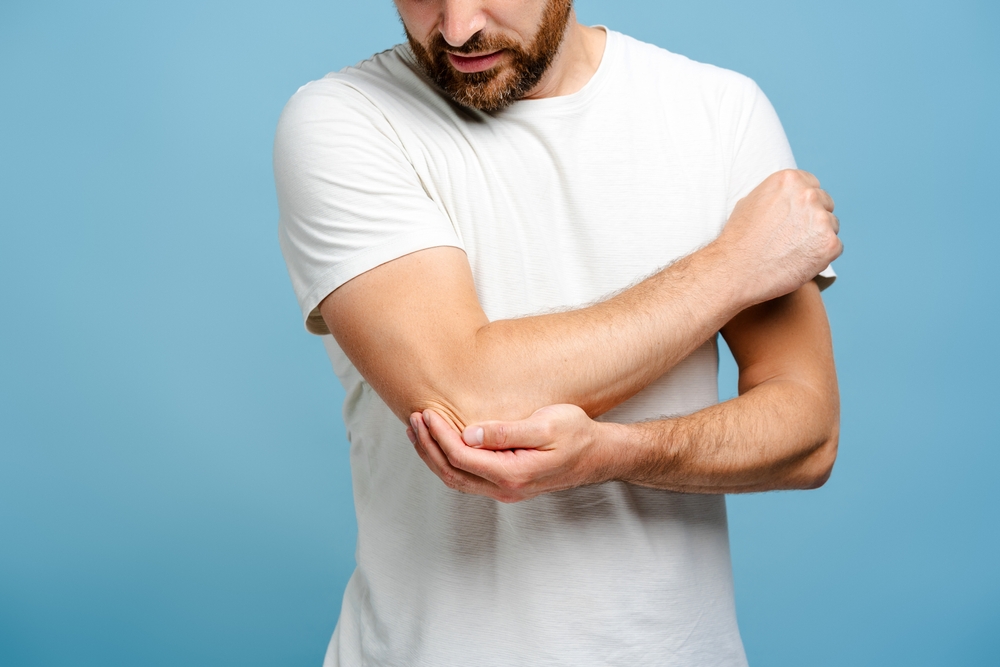
Tennis elbow, or lateral elbow tendinopathy, causes pain around the outside of the elbow and is often linked to repeated gripping, lifting or wrist movement. Despite the name, most people who develop it do not play tennis.

Many cases improve over time. Early management usually focuses on reducing or modifying activities that clearly aggravate symptoms rather than complete immobilisation. Simple pain relief may be appropriate for some people, but medicines are not suitable for everyone and should be used according to individual health circumstances.

Gradual strengthening and rehabilitation of the forearm can be useful, particularly when symptoms persist. A physiotherapist can help tailor exercises and identify work, sport or movement factors that may be maintaining the problem.

Some treatments are commonly discussed but have limitations. Corticosteroid injections can reduce pain in the short term for some people, yet they do not reliably improve long-term outcomes and repeated injections may be unhelpful. Evidence for techniques such as therapeutic ultrasound, dry needling and other procedures varies, so they should not be presented as established cures.

Surgery is rarely needed. Persistent pain, significant weakness, uncertainty about the diagnosis or symptoms that do not improve should be assessed by a GP, physiotherapist or other qualified clinician.


Share This Article
Facebook Copy Link Print
ByAmelia Hart
Amelia Hart is a wellness editor and health-focused writer covering topics related to healthy living, sleep, lifestyle habits, and everyday wellbeing. Her work focuses on making wellness information more accessible, balanced, and practical for modern readers.

Fast Four Quiz: Precision Medicine in Cancer

How much do you know about precision medicine in cancer? Test your knowledge with this quick quiz.
Get Started
NHS Rolls Out One-Minute Pembrolizumab Injection for Eligible Cancer Patients

NHS England is rolling out a subcutaneous form of pembrolizumab that can…

Tinnitus: What It Is, What Can Help and When to Seek Advice

Tinnitus is the perception of sound without an external source. Management depends…

Martha’s Rule: How Escalation Calls Support Patient Safety

Martha’s Rule gives patients, families and staff routes to request urgent review…

You Might Also Like

Why Martial Arts Deserves a Place in Your Weekly Workout
Fitness & Movement

Martial Arts as Exercise: Benefits, Risks and What the Evidence Can Support

By Sophie Mercer
The History of the Gym as a Public Space From Ancient Greece to Today
Fitness & Movement

How Shared Exercise Spaces Changed From Gymnasia to Modern Gyms

By Marcus Iwu
The Ancient Origins of Exercise Science From Hippocrates to Today
Fitness & Movement

How Ancient Medicine Thought About Exercise and Health

By Marcus Iwu
Why Walking Clubs Became Popular in Victorian Britain
Fitness & Movement

Why Organised Walking Grew in Victorian Britain

By Marcus Iwu
London Health Journal Logo Dark London Health Journal Logo Dark

Our mission is to make health information more accessible, balanced, and easier to understand for everyday readers. We focus on evidence-informed reporting, emerging research, lifestyle trends, and practical wellness topics that shape modern life.

Company
  • About Us
  • Contact Us
  • Corrections Policy
  • Editorial Policy
  • Fact-Checking Policy
  • Medical Disclaimer
  • Privacy Policy
Quick Links
  • Fitness & Movement
  • Health News
  • Interviews
  • Mental Health
  • Nutrition
  • Research
  • Wellness

All rights reserved © 2026 | London Health Journal 

Welcome Back!

Sign in to your account

Username or Email Address
Password

Lost your password?