

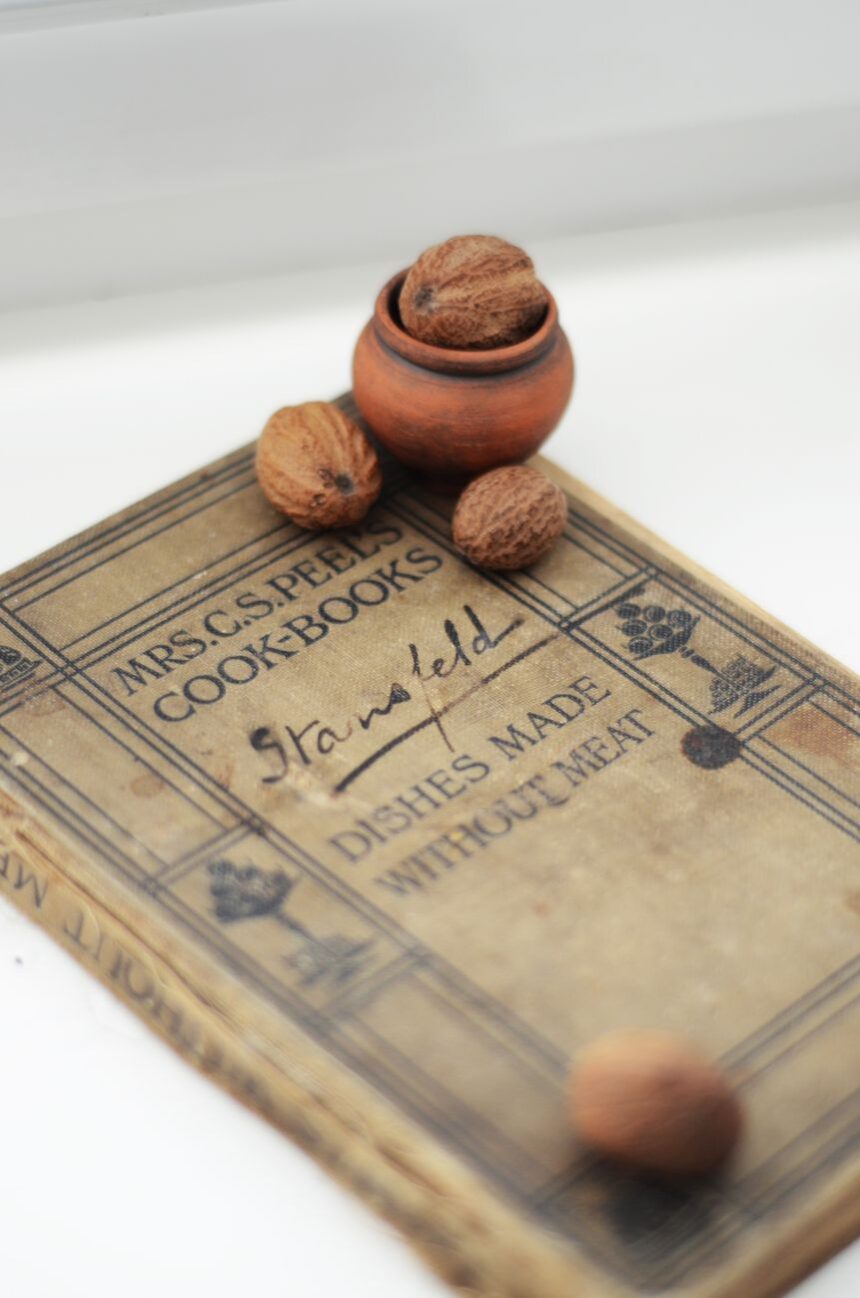
Open a cookbook from the early seventeenth century, and you are immediately struck by how little it resembles a modern collection of recipes. Alongside instructions for roasting meats and baking pastries, you will find detailed guidance on distilling herbal waters, managing household fevers, and soothing an upset stomach. For centuries, the kitchen was understood as an extension of the apothecary. Domestic manuals did not merely instruct readers on how to make food palatable; they offered a comprehensive framework for sustaining bodily balance.
As a nutrition and wellness writer, exploring culinary history offers a fascinating perspective on human habits. Long before the era of randomized controlled trials and nutritional epidemiology, communities relied on accumulated domestic lore, cultural traditions, and shifting medical theories to define what constituted wholesome nourishment. Historical cookbooks serve as physical archives of these evolving philosophies, mapping out how societies have continually reinterpreted the relationship between what is on the plate and how the body functions.
The Kitchen as an Apothecary: Early Modern Domestic Medicine
In the Tudor and Stuart periods, the boundary between cooking and medicine was remarkably porous. Household receipt books—often handwritten and passed down through generations of women—frequently combined culinary ingredients with therapeutic remedies. Spices such as ginger, cinnamon, and nutmeg were valued not only for their intense flavors but for their perceived medicinal properties, particularly their capacity to aid digestion and warm a cold constitution.
During this era, European medical thought was heavily influenced by the ancient framework of the four humours. Maintaining health required keeping bodily fluids—blood, phlegm, black bile, and yellow bile—in balance. Cookbooks reflected this worldview by organizing recipes around the perceived qualities of ingredients, such as whether a food was considered hot, cold, moist, or dry. A heavy meat dish, for instance, might be paired with specific bitter herbs or sharp sauces intended to counteract its supposed warming and clogging effects on the body.
These practices highlight how deeply our ancestors intertwined daily nourishment with physical preservation. Over time, as the word diet shifted from encompassing an entire regimen of living toward a narrower focus on edible substances, the culinary text transformed alongside it. The domestic manual gradually shed its medical prescriptions, leaving room for a more specialized, distinct culinary literature.
Industrialization, Standardization, and the Rise of Practical Domestic Science
The nineteenth century brought sweeping industrial and social changes that fundamentally altered how cookbooks were written and used. As urbanization accelerated and more families moved away from agrarian lifestyles, the traditional transmission of oral cooking knowledge began to fracture. At the same time, the rise of print culture allowed for mass-produced domestic manuals aimed at a growing middle class.
Victorian and Edwardian cookbooks increasingly emphasized efficiency, thrift, and domestic science. Authors sought to standardize measurements and cooking times, moving away from vague historical instructions like “a pinch of this” or “cook until done” toward precise quantities. This period also coincided with early scientific investigations into chemistry and food composition. Domestic economists and reformers began analyzing ingredients through the lens of household management and economy, establishing a new authority for the kitchen.
Yet, these manuals also mirrored the rigid social stratifications of their time. Cookbooks aimed at affluent households featured elaborate multi-course meals that showcased wealth and status through culinary complexity. Conversely, literature directed at working-class families focused heavily on stretching limited resources, maximizing sustenance, and avoiding waste. These texts illustrate that what was deemed a proper, healthy, or responsible diet was rarely determined by nutrition alone; it was constantly negotiated through the realities of class, availability, and social expectation.
Mid-Century Convenience and the Modern Shift Toward Simplicity
Moving into the mid-twentieth century, the post-war boom introduced a new era of food technology, processed ingredients, and industrialized convenience. Cookbooks from the 1950s and 1960s often celebrated tinned goods, frozen foods, and streamlined preparation methods designed to save time in the modern home. The emphasis shifted toward speed, novelty, and the embrace of technological progress in the kitchen.
However, this trend was soon accompanied by a counter-movement that re-examined traditional ingredients and whole foods. By the later decades of the twentieth century, popular cookbooks began championing regional cuisines, scratch cooking, and a renewed appreciation for freshness. This ongoing evolution demonstrates that dietary ideas rarely move in a straight line; periods of intense industrialization frequently spark a cultural return to perceived simplicity and natural origins.
Reflecting on Our Culinary Past
Looking back at centuries of culinary literature reveals that our current preoccupations with food, nourishment, and daily wellness are part of a very long human conversation. While modern dietary guidance is informed by contemporary scientific research and rigorous clinical evidence, the fundamental desire to use the kitchen as a space for care remains unchanged.
History reminds us that dietary beliefs are deeply shaped by the technological, social, and cultural contours of their era. By examining the cookbooks of the past, we gain a deeper appreciation for how previous generations understood their bodies and the world around them.
If you would like to share your thoughts on this topic or explore further cultural features, please feel free to reach out via our contact page.