

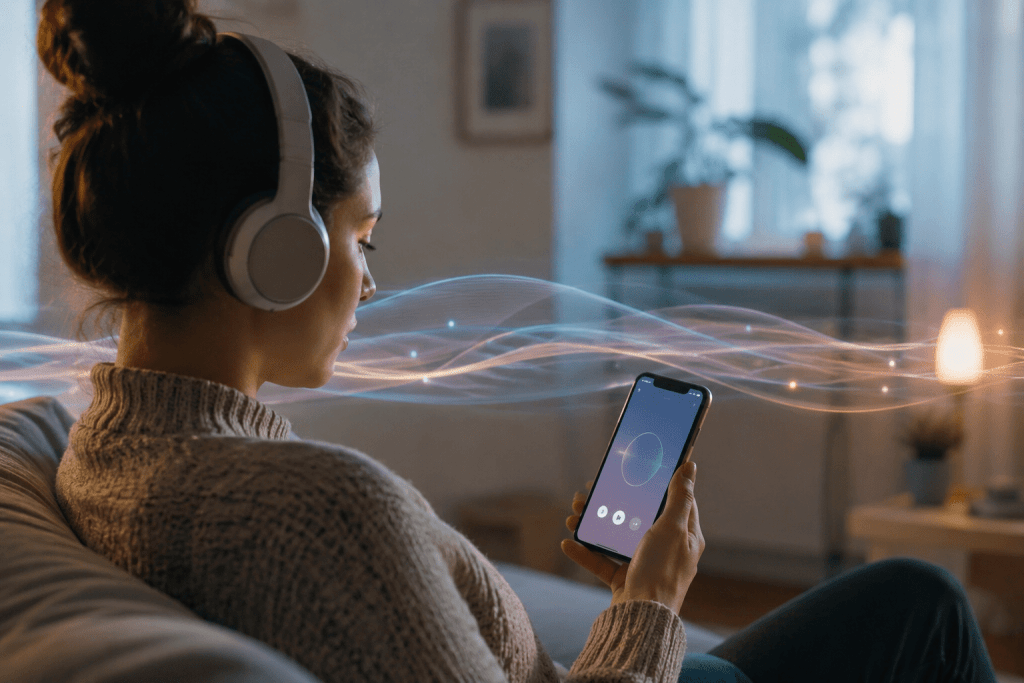
Digital tools based on eye movement desensitisation and reprocessing (EMDR) are being developed for smartphones, but the evidence remains early. A mobile app can reproduce elements such as bilateral visual, auditory or tactile stimulation; that is not the same as delivering the full EMDR protocol used in clinical practice.
Pilot research has explored whether EMDR-inspired apps are feasible and whether users report changes in post-traumatic stress symptoms. Such studies can be useful for testing usability and generating hypotheses, but small samples, high dropout rates and self-reported outcomes limit what can be concluded about effectiveness.
Remote EMDR delivered by a trained therapist is also different from self-guided app use. Therapist-led treatment includes assessment, preparation, pacing, monitoring of distress and clinical judgement about when to pause or change course. Those safeguards are difficult to reproduce in a standalone app.
For now, EMDR apps should be described as experimental or adjunctive tools rather than replacements for evidence-based trauma treatment. People experiencing significant trauma symptoms should seek assessment from an appropriately qualified mental-health professional.