


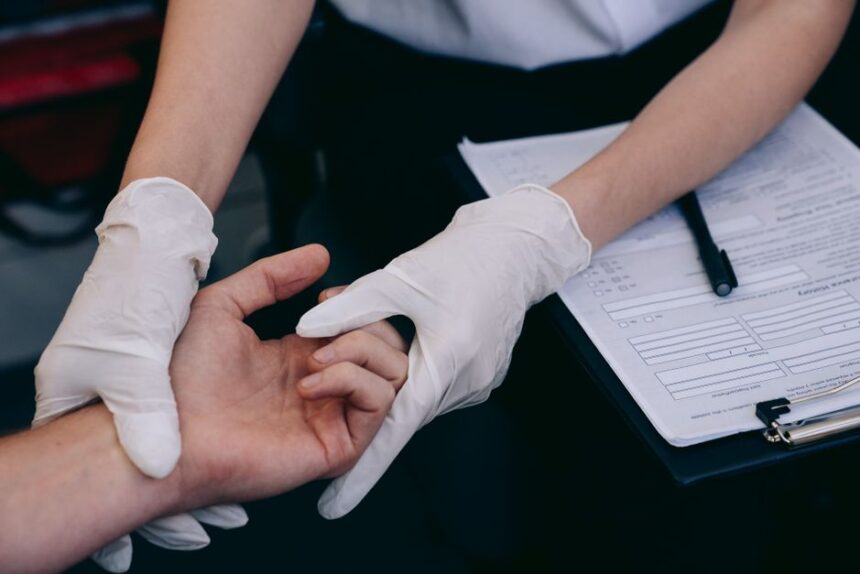
This article examines the historical evolution of pulse examination across several distinct medical systems, tracking how ancient and pre-modern healers observed arterial rhythms long before the advent of modern cardiovascular physiology. We will explore how different traditions categorized tactile sensations at the wrist and why the arterial beat became a foundational pillar of clinical evaluation across diverse civilizations. Fitness enthusiasts and movement coaches often look at resting heart rates with digital precision today, but stepping back into medical history reveals a completely different framework of observation.
For centuries, touching the wrist was not about calculating beats per minute or checking cardiorespiratory recovery after a heavy training session. Instead, practitioners treated the arterial pulse as a complex text written in tactile sensations—rhythms, volumes, and speeds that supposedly reflected the internal balance or disruption of the whole body. While ancient medical traditions varied wildly in their underlying philosophy, nearly all of them converged on the radial artery as a window into hidden physiological states.
The Foundations of Pulse Lore in Early Greco-Roman Tradition
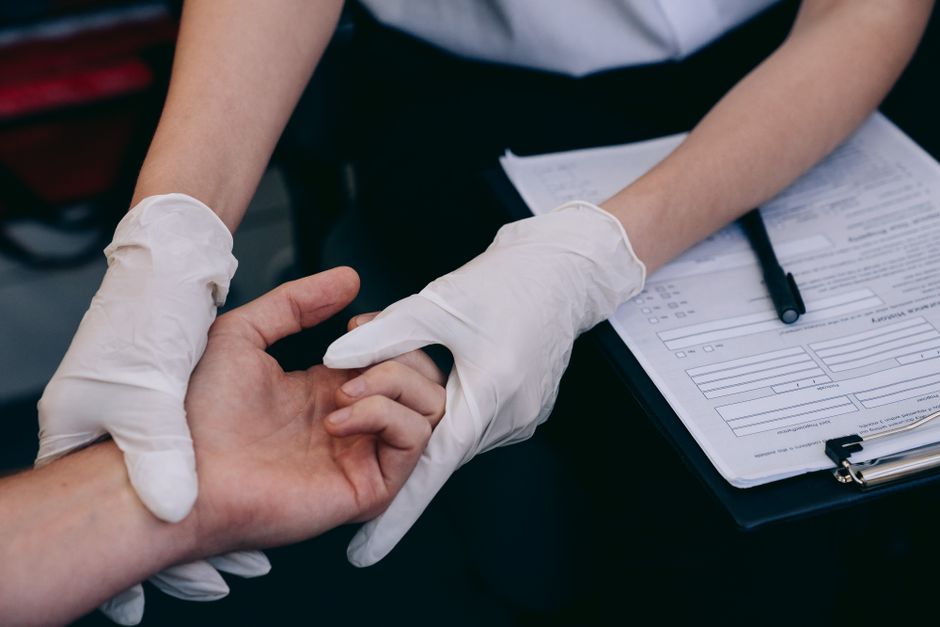
In the classical Greco-Roman world, pulse examination was deeply intertwined with humoral theory. Physicians influenced by Galen and Hippocrates did not view the body as a network of plumbing or electrical impulses, but as an ecosystem governed by four fundamental fluids: blood, phlegm, black bile, and yellow bile. The pulse was thought to reveal the motion of the heart and arteries, which expanded and contracted through an innate faculty.
Galen wrote extensively on the subject, producing multi-volume treatises categorizing dozens of distinct pulse types. He classified them by frequency, rhythm, size, and strength. A physician would evaluate whether a pulse felt hard like a cord, soft like wool, swift, slow, creeping, or bounding. These qualitative assessments were meant to indicate whether a patient was overheating, suffering from an excess of a specific humor, or slipping into a state of depletion. It is important to note that these historical interpretations do not map neatly onto modern diagnostic categories like hypertension or arrhythmia. They were speculative frameworks built on empirical touch rather than internal imaging or blood pressure cuffs.
Diagnostic Taxonomy in Traditional East Asian Medicine
Moving across Eurasia, classical Chinese medicine developed an entirely separate and exceptionally detailed system of pulse diagnosis, known as maixue. Rooted in texts such as the Huangdi Neijing (Yellow Emperor’s Inner Canon), this approach treated the radial pulse not merely as an indicator of heart activity, but as a map reflecting the condition of multiple internal organs simultaneously.
Practitioners typically examined three distinct positions on the radial artery of each wrist (known as cun, guan, and chi), applying varying levels of pressure—surface, middle, and deep—to assess different organ networks. The terminology used to describe these sensations included qualities like “floating,” “sinking,” “slippery,” “choppy,” “string-like,” and “knotted.”
- Floating pulses were felt with light touch near the skin.
- Sinking pulses required firm pressure closer to the bone.
- Slippery pulses felt smooth and rolling, akin to pearls sliding on a dish.
- Choppy pulses felt ragged, uneven, and hesitant under the fingertips.
This tradition emphasized that pulse qualities changed with the seasons, the time of day, and the patient’s constitution. Just as we look at recovery metrics differently depending on sleep and stress, historical practitioners adjusted their baseline expectations based on environmental context. However, these categories belonged to a paradigm of energetic balance, qi flow, and meridian theory, remaining entirely distinct from the physiological mechanisms uncovered centuries later by modern medicine.
South Asian and Islamic Scholarly Synthesis
In South Asian medical frameworks, notably Ayurveda, the pulse (nadi) similarly served as a diagnostic touchpoint for understanding the tridosha system—vata, pitta, and kapha. Ayurvedic practitioners felt the pulse at the wrist to detect imbalances among these elemental forces, attributing distinct rhythmic qualities to each dosha. For instance, a pulse associated with vata was often likened to the movement of a snake or a bird, erratic and quick, while a kapha pulse was described as slow and steady, reminiscent of a swan’s gait.
During the medieval Islamic Golden Age, physicians such as Avicenna (Ibn Sina) synthesized and expanded upon both Greco-Roman and Persian-Indian pulse lore. In his monumental work The Canon of Medicine, Avicenna refined the classification of pulse attributes, detailing ten distinct features that a clinician should note during an examination, including the duration of the beat, the state of the vessel wall, and the temperature of the surrounding skin. These scholars added immense empirical detail to the tactile art of examination, even if their foundational understanding of circulation lacked the concept of a closed circulatory loop driven by muscular pumping.
To understand how clinical environments evolved alongside these diagnostic tools, it is worth looking at the history of the hospital, where bedside observation gradually transitioned from classical humoral theories toward standardized physical examinations.
The Shift Toward Modern Physiological Measurement
The transition from qualitative pulse reading to quantitative cardiovascular measurement occurred slowly over the seventeenth, eighteenth, and nineteenth centuries. The watershed moment arrived with William Harvey’s 1628 publication demonstrating the circulation of blood through a closed system pumped by the heart. Once the heart was understood as a mechanical pump rather than a passive vessel that drew in air and expelled vapors, the purpose of feeling the pulse began to shift.
Physicians gradually abandoned complex multi-category tactile taxonomies in favor of simpler metrics: counting the exact number of beats per minute using a watch equipped with a second hand. Later inventions, such as the sphygmomanometer and the stethoscope, further transformed clinical assessment by replacing subjective fingertip impressions with numerical blood pressure readings and crisp acoustic data. When looking at how the stethoscope changed clinical examination, it becomes clear that modern medicine favored reproducible, objective sounds over the poetic and qualitative language of historical pulse lore.
Historical Practice Versus Modern Understanding
It is easy for contemporary observers to dismiss historical pulse reading as mere superstition, but that perspective misses the pragmatic reality of pre-modern healing. For centuries, physical touch was one of the very few non-invasive tools available to a practitioner. By systematically palpating the wrist, healers cultivated a high degree of tactile sensitivity, noticing subtle shifts in temperature, moisture, and arterial tone that indicated a patient was deteriorating or improving.
Fitness experts and athletes today rely on heart rate monitors, GPS watches, and recovery algorithms to gauge physical strain. Yet the foundational human impulse remains the same: we check the beat to understand what is happening beneath the skin. While historical traditions operated under entirely different theoretical frameworks—attributing arterial movement to humors, elemental doshas, or subtle energy flows—their meticulous documentation of the pulse laid an essential groundwork for the clinical attentiveness that defines modern healthcare today.
If you have questions about our historical features or editorial standards, feel free to get in touch with us.