


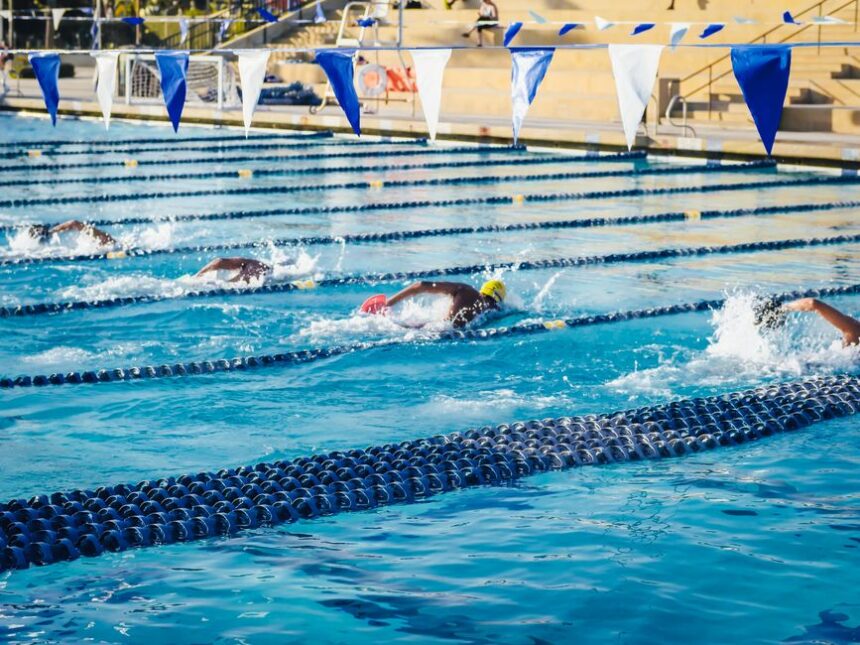
This article examines the historical trajectory of how competitive swimming transitioned from regional recreational pastimes into a staple discipline of the modern Olympic Games. We will look at the early integration of water events in Athens, the evolution of race formats, the standardisation of strokes, and the technological shifts in timing and pool design that professionalised the sport.
Origins in the 1896 Athens Games
Swimming was part of the modern Olympic programme from its inception in Athens in 1896. However, these early competitions bore little resemblance to the highly regulated, precision-engineered events seen today. Held in the open sea of the Bay of Zea rather than a controlled pool, the inaugural races faced environmental challenges that dictated tactics. Competitors had to contend with cold water temperatures, unpredictable chop, and crude starting mechanisms. The races were distinctly brief in variety; for instance, the 1896 schedule included events such as the 100-metre freestyle for sailors, alongside a general 100-metre and 1200-metre freestyle. There were no designated lanes, no diving blocks, and stroke techniques were left largely to the individual preference of the swimmer.
Similar to how endurance challenges evolved in other disciplines, such as how the marathon became a modern endurance event, early Olympic swimming was shaped heavily by the practical limits of open-air logistics. Swimmers relied on brute strength and endurance to combat the elements. The International Olympic Committee and the governing bodies that followed recognised that if swimming was to gain global sporting credibility, it required standardisation far beyond what open-water venues could provide.
The Evolution of Strokes and Race Formats
During the late 19th and early 20th centuries, the mechanics of swimming strokes underwent a rapid evolution. At the 1896 and 1900 Games, the dominant stroke was a variation of the breaststroke or an early, heavy-armed freestyle. The introduction of the Australian crawl—popularised by swimmers like Richard Cavill, who observed traditional swimming methods used by Indigenous peoples in the Solomon Islands—fundamentally shifted speed capabilities. This stroke combined an alternating overarm recovery with a narrow flutter kick, creating a much more hydrodynamic body position.
As strokes diversified, the Olympic programme expanded to accommodate them. Backstroke was introduced at the 1904 St. Louis Games, and breaststroke became a distinct discipline shortly thereafter. The butterfly stroke emerged much later as an offshoot of the breaststroke, gaining official recognition as a separate event style in the mid-20th century. Race distances also underwent rationalisation:
- Early programmes featured unusual distances dictated by local open-water geography.
- Gradually, metric distances replaced imperial measurements to align with global athletic standards.
- Relay events were introduced to foster team competition and broaden spectator appeal.
- Women’s swimming events debuted at the 1912 Stockholm Olympics, marking a crucial expansion of the sport’s demographic reach.
The Shift to Indoor Pools and Standardised Infrastructure
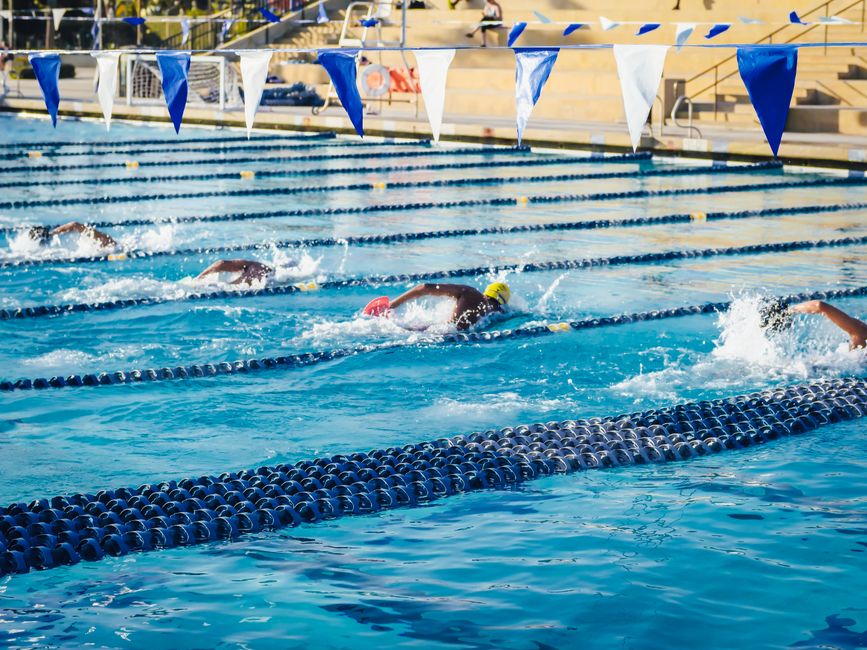
Moving races from open bodies of water to indoor pools was arguably the single most important factor in turning swimming into a quantifiable, elite sport. Outdoor conditions introduced too many variables—currents, wind, and temperature fluctuations—that made fair record-keeping virtually impossible. The 1908 London Olympics marked a turning point with the construction of the first purpose-built 100-metre swimming pool, which was installed inside the White City Stadium running track.
Subsequent Olympic cycles pushed for the adoption of the standard 50-metre pool configuration, accompanied by lane ropes designed to dissipate turbulent wake generated by competing athletes. These infrastructure changes transformed race tactics. Swimmers could train with predictable turning walls, leading to the refinement of the tumble turn and streamlined underwater glides. Much like how shared exercise spaces changed from gymnasia to modern gyms, the environment of aquatic competition evolved from makeshift arenas into highly specialised, controlled facilities designed strictly for optimal athletic output.
Timing Technology and Governing Rules
As the margins between victory and defeat narrowed to fractions of a second, manual stopwatch timing became obsolete. The introduction of semi-automatic and eventually fully automatic timing systems revolutionized the sport. By the mid-20th century, touch pads installed at the pool walls allowed swimmers to stop the clock simply by applying pressure upon arrival, removing human error from judges looking down from deck level.
Simultaneously, international governance shifted. Founded in 1908, World Aquatics (formerly known as FINA) took over the standardisation of rules, officiating, and world record ratifications. Judges enforced strict criteria regarding false starts, legal stroke transitions at turn walls, and finishing touches. These administrative frameworks ensured that a time swum in one part of the world held the exact same competitive validity as a time recorded at the Olympic Games.
Fitness needs and training methodologies adapted alongside these administrative milestones. The modern competitive swimmer transitioned from a self-taught amateur into a specialized athlete supported by dedicated training cycles, biomechanical analysis, and rigorous physiological monitoring. For those interested in the broader historical relationship between rigorous physical testing and athletic science, further reading can be found regarding how elite athletes helped shape exercise physiology.
Ultimately, the journey of competitive swimming from choppy open-water heats to the high-tech pools of the modern Olympics reflects a broader sporting trend: the relentless pursuit of measurement, fairness, and structural control.
If you have questions about our historical features or wish to get in touch with our editorial desk, please visit our contact page.